
The Shift to Alternative Fuels in Offshore Support Vessels: LNG, Methanol, and Biofuels Readiness
The maritime industry faces unprecedented pressure to decarbonize, driven by increasingly stringent international regulations and climate commitments. Offshore Support Vessels (OSVs), which play a critical role in supporting offshore energy operations, must transition from conventional heavy fuel oil (HFO) to cleaner alternatives. This comprehensive analysis examines three primary alternative fuels—Liquefied Natural Gas (LNG), Methanol, and Biofuels—evaluating their technical feasibility, environmental impact, economic viability, and regulatory compliance for OSV applications. Our findings demonstrate that while LNG offers immediate short-to-medium term benefits with a 20-25% reduction in CO₂ emissions, a multi-fuel approach combining LNG, methanol, and advanced biofuels will be necessary to achieve long-term decarbonization goals. SENA SHIP DESIGN is positioned to support vessel operators and shipowners through comprehensive design, engineering, and consultancy services for alternative fuel integration.
1. Introduction: The Maritime Decarbonization Imperative
The International Maritime Organization (IMO) has established ambitious emissions reduction targets: a 40% reduction in greenhouse gas (GHG) emissions by 2030 and a 70% reduction by 2050, compared to 2008 baseline levels. These regulatory mandates, combined with corporate sustainability commitments and investor pressure, have catalyzed a fundamental transformation in marine fuel selection. Offshore Support Vessels, which transport supplies, equipment, and personnel to offshore platforms and renewable energy installations, currently operate predominantly on conventional marine fuels. These vessels face unique operational challenges, including dynamic positioning requirements, variable power demands, and extended periods at sea—factors that significantly influence fuel selection criteria.
The transition to alternative fuels is not merely an environmental imperative; it represents a strategic business opportunity. Early adopters of cleaner fuel technologies gain competitive advantages through reduced operational costs, enhanced regulatory compliance, and improved corporate reputation. However, the selection of appropriate alternative fuels requires rigorous technical, environmental, and economic analysis to ensure operational reliability and financial viability.
2. Liquefied Natural Gas (LNG): The Near-Term Solution.
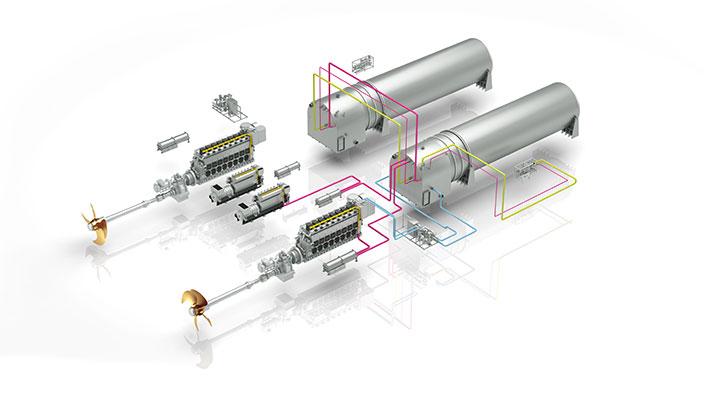
Liquefied Natural Gas has emerged as the most mature and widely adopted alternative marine fuel, with established infrastructure, proven engine technology, and regulatory frameworks. LNG is primarily composed of methane (CH₄) and offers significant environmental benefits compared to conventional marine fuels.
2.1. Technical Specifications
|
Parameter
|
Value
|
|---|---|
|
Volumetric Energy Density
|
~11 GJ/m³
|
|
Specific Energy
|
~54 MJ/kg
|
|
Storage Temperature
|
-161°C (cryogenic)
|
2.2. Environmental Benefits
LNG delivers substantial environmental advantages over conventional marine fuels. The primary benefits include:
- CO₂ Reduction: 20-25% reduction compared to heavy fuel oil (HFO).
- SOx Emissions: Virtually eliminated (LNG contains no sulfur).
- NOx Emissions: 80-90% reduction compared to conventional fuels.
- Particulate Matter: 95%+ reduction in PM emissions.
- Acoustic Signature: Reduced noise pollution from engine operation.
2.3. Methane Slip: A Critical Challenge
Despite its environmental advantages, LNG presents a significant technical challenge: methane slip. This phenomenon occurs when unburned methane escapes during combustion or through the supply chain. Methane possesses a global warming potential (GWP) of 28-36 times that of CO₂ over a 100-year horizon, making methane slip a critical environmental concern. Research indicates that methane slip rates vary significantly across different engine types and operating conditions, with emissions increasing substantially during low-load engine operations. This limitation underscores the necessity for advanced engine technology and continuous operational optimization to maximize the environmental benefits of LNG.
2.4. Regulatory Status and Infrastructure
LNG benefits from mature regulatory frameworks, including the IMO‘s International Code of Safety for Ships Using Gases or Other Low-Flashpoint Fuels (IGF Code). The technology has achieved high regulatory maturity, with dual-fuel engines widely available from major manufacturers. Global LNG bunkering infrastructure is expanding rapidly, particularly in Northern Europe, Asia-Pacific, and key maritime hubs. Fuel costs range from $500-$1,000 per ton, reflecting market volatility and regional supply variations.
3. Methanol: The Emerging Alternative
Methanol is gaining significant attention as a marine fuel due to its simpler storage requirements, lower technical barriers to implementation, and strong environmental potential. As a liquid at ambient temperature and pressure, methanol offers operational advantages over LNG, particularly for space-constrained vessels like OSVs.
3.1. Technical Characteristics
|
Parameter
|
Value
|
|---|---|
|
Volumetric Energy Density
|
15.8 GJ/m³
|
|
Specific Energy
|
19,700 kJ/kg
|
|
Storage Temperature
|
Liquid at ambient temperature
|
3.2. Storage and Handling Advantages
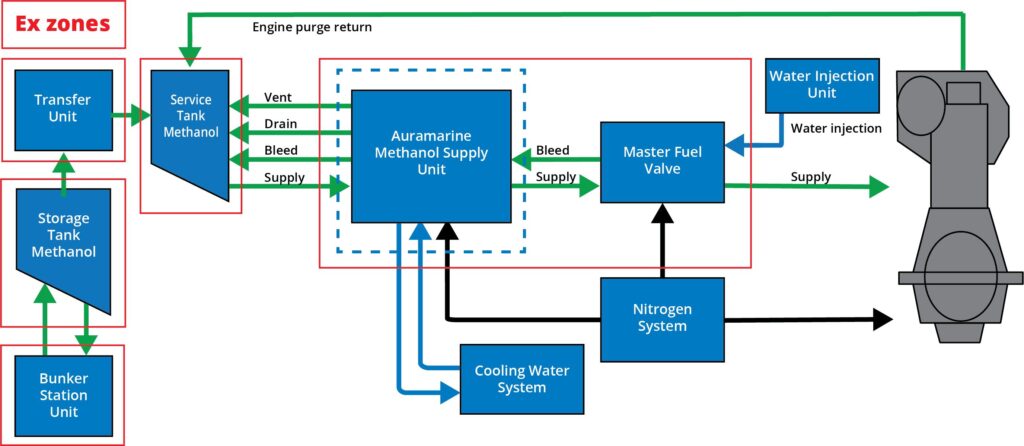
Methanol’s primary advantage over LNG lies in its storage simplicity. As a liquid at ambient temperature and pressure, methanol requires straightforward double-walled storage tanks without cryogenic insulation systems. This characteristic significantly reduces capital expenditure for vessel conversion and simplifies onboard handling procedures. The fuel is compatible with existing marine fuel infrastructure, requiring only minor modifications to bunkering systems and storage facilities. For OSVs with limited deck space, methanol’s simpler storage architecture provides substantial design flexibility.
3.3. Environmental Profile
Methanol’s environmental impact depends critically on its production method. Green methanol, produced from renewable sources through electrolysis or biomass conversion, offers GHG reductions of 60-80% compared to conventional fuels. Grey methanol, derived from fossil fuels, provides more modest benefits. The fuel significantly reduces SOx and NOx emissions compared to conventional marine fuels, contributing to improved air quality in port areas and coastal regions.
3.4. Regulatory Readiness and Market Status
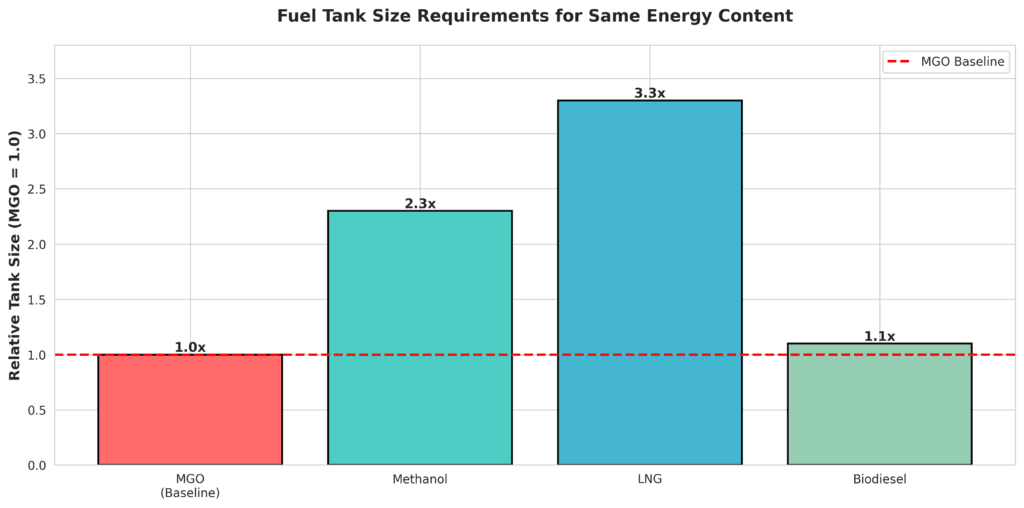
Methanol has achieved rapid regulatory advancement. Both 2-stroke and 4-stroke methanol engines are projected to reach full availability by 2024-2025, with regulatory maturity expected before 2026. The IMO has established the International Code of Safety for Ships Using Gases or Other Low-Flashpoint Fuels (II Code) for methanol-fueled vessels. Current fuel costs range from $400-$600 per ton, making methanol economically competitive with LNG. The primary limitation is the lower energy density, requiring approximately 2.3 times larger fuel tanks compared to conventional MGO for equivalent energy content.
4. Biofuels: The Sustainable Long-Term Solution
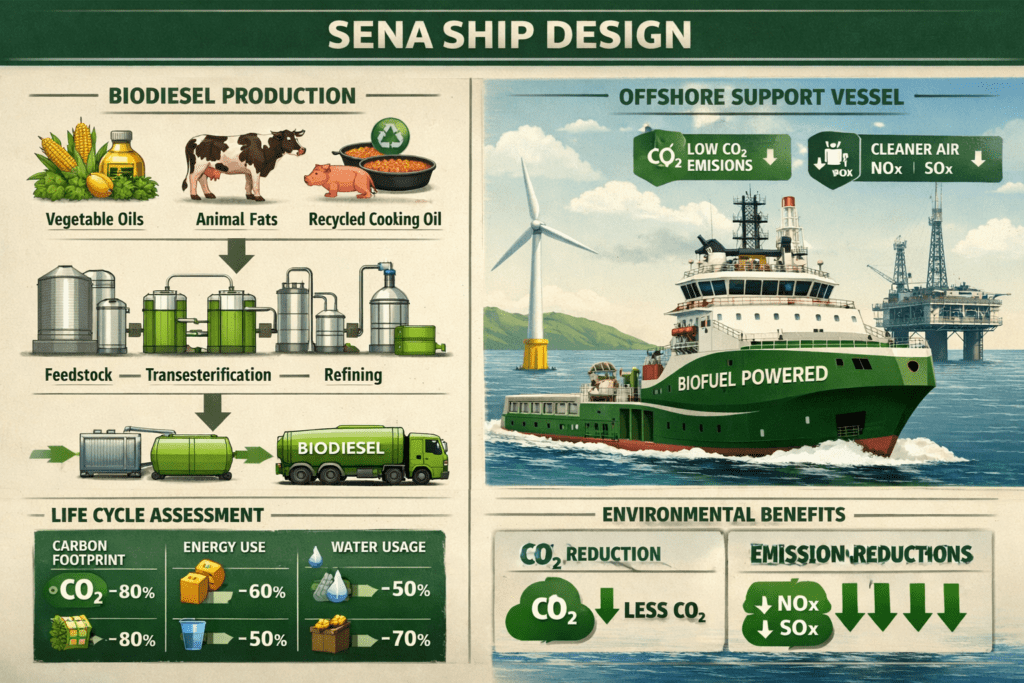
Biofuels represent a transformative pathway toward sustainable maritime decarbonization. Derived from renewable feedstocks including vegetable oils, animal fats, and recycled cooking oil, biofuels can achieve dramatic reductions in lifecycle greenhouse gas emissions while maintaining compatibility with existing marine infrastructure.
4.1. Production and Feedstock Diversity
Biofuels are produced through transesterification, a chemical process that converts renewable feedstocks into marine-grade fuel. The industry distinguishes between first-generation biofuels (derived from food crops) and advanced second-generation biofuels (produced from lignocellulosic materials, waste oils, and algae). This diversity of feedstock options provides supply chain resilience and reduces competition with food production systems.
4.2. Environmental Performance
Biofuels deliver exceptional environmental benefits through lifecycle assessment analysis:
- CO₂ Reduction: 50-86% reduction compared to petroleum diesel.
- SOx Emissions: Virtually eliminated (biofuels contain minimal sulfur).
- NOx Emissions: Comparable to or lower than conventional fuels.
- Particulate Matter: 50-65% reduction in PM emissions.
- Renewable Carbon: Biofuels utilize atmospheric carbon, supporting circular economy principles.
4.3. Technical Compatibility
A significant advantage of biofuels is their compatibility with existing marine diesel engines. Biodiesel can be used as a drop-in fuel or blended with conventional marine gas oil (MGO) with minimal or no engine modifications. This characteristic dramatically reduces retrofit costs and implementation timelines compared to LNG or methanol conversions. Energy density comparable to conventional diesel (approximately 33 MJ/kg) means that fuel tank sizes require only minimal adjustment.
4.4. Supply Chain and Regulatory Status
The primary limitation of biofuels is current supply constraints. Global biofuel production capacity can currently meet only approximately 15% of the maritime sector’s fuel demand. However, significant investments in advanced biofuel production facilities are expanding capacity. Regulatory frameworks are evolving, with the EU establishing sustainability criteria for biofuels and the IMO recognizing biofuels as compliant with IMO 2020 regulations. Cost ranges from $450-$700 per ton, with green biofuels commanding premiums of $600-$900 per ton.
5. Comparative Technical Analysis
5.1. Energy Density Comparison
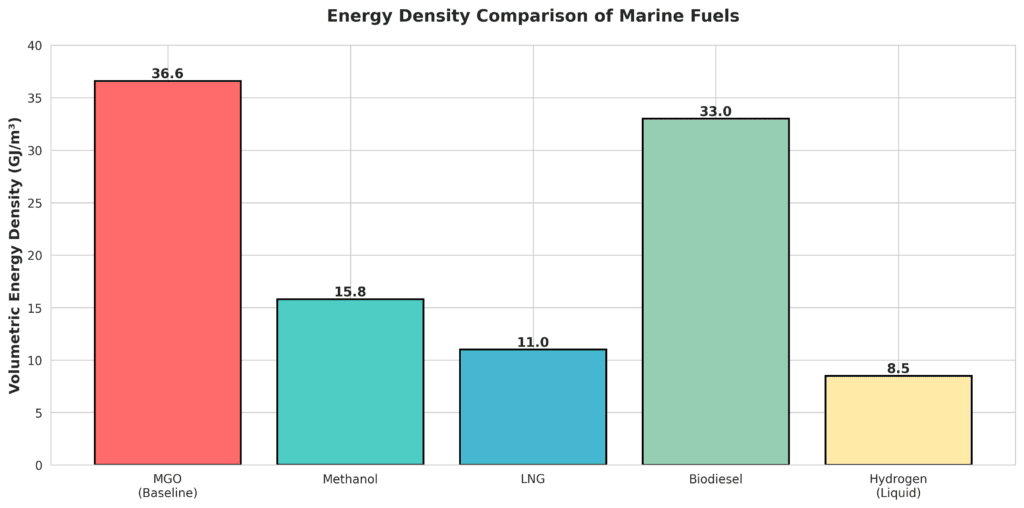
Energy density is a critical parameter determining fuel tank size requirements. MGO (Marine Gas Oil) serves as the baseline reference. LNG exhibits the lowest volumetric energy density at 11 GJ/m³, requiring approximately 3.3 times larger storage tanks for equivalent energy content. Methanol requires 2.3 times larger tanks, while biodiesel approaches conventional fuel density, requiring only minimal tank size increases.
5.2.Greenhouse Gas Emissions Profile
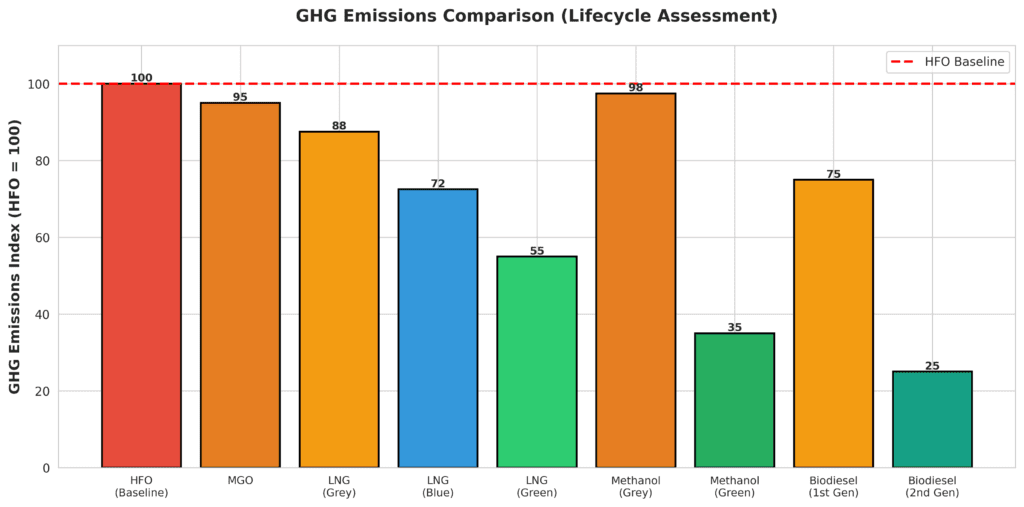
Lifecycle assessment analysis reveals significant variations in environmental performance based on fuel production methods. Green biofuels (second-generation) demonstrate the lowest GHG emissions, achieving 75% reductions compared to HFO. Green methanol and blue LNG offer substantial reductions (35-55%), while grey variants provide more modest benefits. This analysis underscores the critical importance of fuel sourcing and production pathway selection in maximizing environmental benefits.
5.3. Technology Readiness Timeline
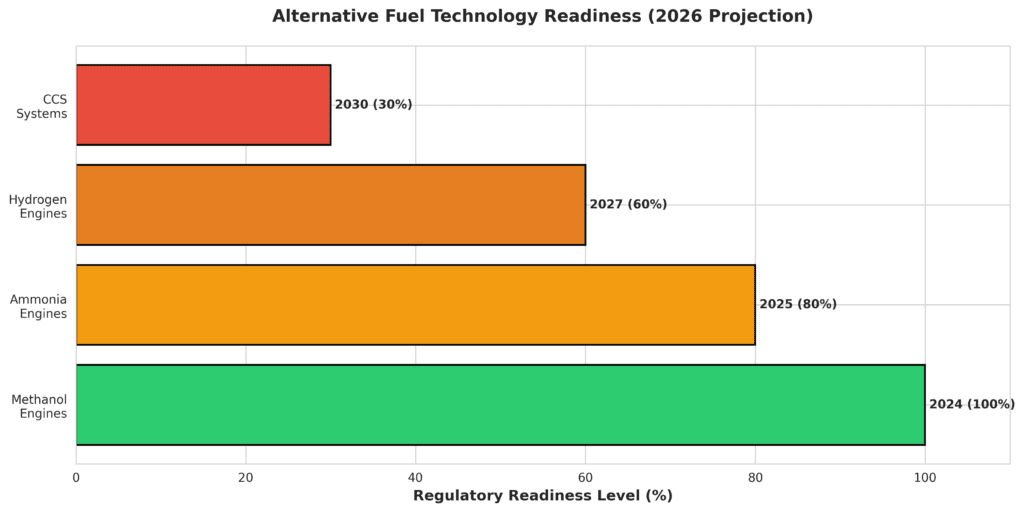
Methanol engine technology is projected to achieve full regulatory maturity by 2024-2025, offering the fastest pathway to implementation. Ammonia engines will follow in 2025, with hydrogen and carbon capture systems reaching maturity around 2030. This timeline indicates that methanol represents the most immediately viable alternative fuel for new OSV construction and retrofitting projects.
5.4. Storage Tank Size Requirements
For OSVs with limited deck space, storage tank size represents a critical design constraint. Methanol requires 2.3 times larger tanks than MGO, while LNG demands 3.3 times larger storage capacity. This consideration is particularly important for existing vessel retrofits, where space limitations may necessitate methanol or biofuel selections over LNG.
5.5. Fuel Cost Analysis
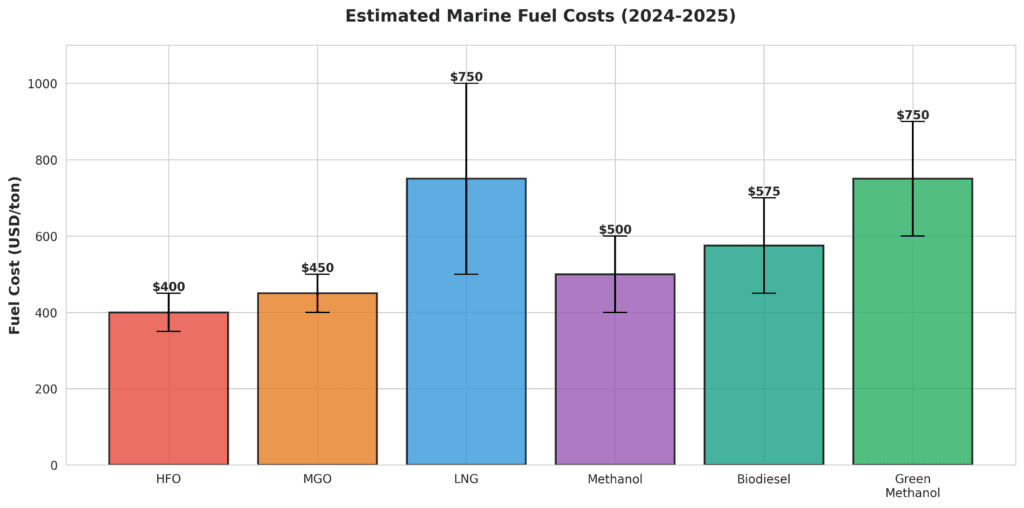
Fuel costs represent a significant operational expense for vessel operators. Current market analysis indicates that LNG ($500-$1,000/ton) and methanol ($400-$600/ton) offer competitive pricing compared to conventional fuels. Green methanol and advanced biofuels command premiums ($600-$900/ton), reflecting their enhanced environmental benefits and current supply constraints. Long-term cost projections suggest that alternative fuel prices will stabilize as production scales and supply chains mature.
6. Offshore Support Vessel-Specific Considerations
6.1. Operational Profile Analysis
Offshore Support Vessels operate under unique operational constraints that significantly influence fuel selection. Typical OSV operational profiles include:
- Dynamic Positioning: Continuous power demand for station-keeping in variable sea states.
- Variable Load Operations: Power requirements fluctuate based on cargo handling and weather conditions.
- Extended Range: 6,000+ nautical mile operational range requiring substantial fuel capacity.
- Bunkering Intervals: 14-day voyage cycles with bunkering opportunities at designated ports.
- Harsh Environment: Extreme weather conditions requiring robust fuel system design.
6.2. Design and Engineering Challenges
Alternative fuel integration in OSVs presents specific engineering challenges. The limited deck space available on 85-meter vessels constrains fuel tank sizing, making methanol or biofuel selections more practical than LNG for retrofit applications. Dynamic positioning systems require reliable, continuous power supply, necessitating fuel system redundancy and advanced monitoring systems. The harsh marine environment demands robust fuel handling systems with enhanced safety features and corrosion protection.
6.3. Tri-Fuel and Hybrid Propulsion Systems
Advanced OSV designs are incorporating tri-fuel capability, allowing operation on LNG, methanol, and conventional diesel. This approach provides operational flexibility and future-proofs vessels against evolving regulatory requirements and fuel availability. Hybrid propulsion systems combining diesel-electric and battery technologies offer additional emission reduction opportunities, particularly during dynamic positioning operations where power demands are relatively constant.
7. SENA SHIP DESIGN: Your Partner in Alternative Fuel Integration
SENA SHIP DESIGN is a leading naval architecture and marine engineering consultancy specializing in innovative ship design and advanced engineering solutions. Our expertise encompasses the complete spectrum of alternative fuel system integration for offshore support vessels and other marine applications.
- Concept Design: Feasibility studies and preliminary designs for alternative fuel system integration, including technical and economic analysis.
- Basic/Tender Design: Detailed design packages for regulatory approval and class society compliance, incorporating fuel system architecture and safety systems.
- Detailed Engineering: Comprehensive production engineering for fuel tanks, piping systems, engine modifications, and control systems.
- Refit & Conversion Design: Specialized services for retrofitting existing OSVs with alternative fuel systems, addressing space constraints and operational continuity.
- Construction Supervision: On-site support during vessel construction or conversion, ensuring quality control and regulatory compliance.
- Advanced Engineering: Computational fluid dynamics (CFD) and finite element analysis (FEA) for fuel system optimization and performance validation.
- Marine Consultancy: Strategic advisory services for fuel selection, transition planning, and regulatory compliance strategies.
With deep expertise in offshore vessel engineering, SENA SHIP DESIGN is positioned to guide this transition—delivering innovative, sustainable, and high-performance vessel designs for the future.
Ready to Transition Your Fleet?
Contact SENA SHIP DESIGN to develop your next generation of offshore vessels powered by cleaner fuels.
© 2026 SENA SHIP DESIGN. All rights reserved. All images are for illustrative purposes; actual deliverables include fully owned IP of the final design.