Lifecycle Optimization for Offshore Vessels: Designing for Long-Term Uptime and Lower Emissions
A Scientific Analysis by SENA SHIP DESIGN
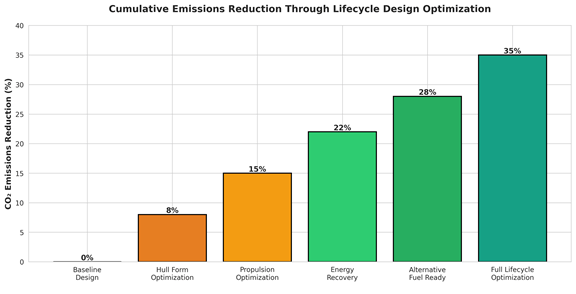
Lifecycle optimization represents a paradigm shift in maritime engineering, moving beyond traditional short-term operational thinking toward holistic, long-term strategic planning. For offshore support vessels, which operate under demanding conditions with extended service lives spanning 25-30 years, lifecycle optimization delivers transformative benefits: reducing total cost of ownership by 25-40%, improving vessel availability to 98.5% or higher, and achieving cumulative emissions reductions of 35% or more. This comprehensive analysis examines the scientific principles, technical methodologies, and economic drivers behind lifecycle optimization, demonstrating how SENA SHIP DESIGN’s integrated approach to vessel design, maintenance planning, and operational optimization positions offshore operators for sustained competitive advantage and environmental leadership.
Lifecycle optimization refers to the systematic integration of design, engineering, operation, and maintenance strategies to achieve:
- Maximum vessel uptime.
- Minimum operational expenditure (OPEX).
- Reduced emissions footprint.
- Extended service life.
1. Understanding Lifecycle Optimization in Offshore Design.
The maritime industry has traditionally operated under a reactive maintenance paradigm, addressing equipment failures as they occur and making capital investment decisions based primarily on vessel age. This approach, while economically rational in the short term, fails to optimize total cost of ownership and leaves substantial value on the table. Contemporary offshore support vessel operations demand a fundamentally different approach. Vessels operating in dynamic positioning mode, supporting renewable energy installations, or conducting specialized offshore operations face operational demands that require unprecedented levels of reliability and efficiency.
Lifecycle optimization acknowledges a critical reality: vessel age alone does not determine operational capability or economic viability. Well-maintained, strategically upgraded vessels can outperform newer vessels that have not benefitted from best-practice maintenance and timely technology investments. This principle has profound implications for fleet management strategy, capital allocation decisions, and environmental performance.
The transition to lifecycle optimization is driven by converging pressures: increasingly stringent environmental regulations, rapidly evolving propulsion and efficiency technologies, volatile fuel costs, and the imperative to maximize return on substantial capital investments. For offshore operators, lifecycle optimization is not merely a cost management tool; it is a strategic necessity for maintaining competitiveness and achieving sustainability objectives.
2. Lifecycle Optimization Fundamentals.
Definition and Scope.
Lifecycle optimization is a holistic approach that systematically evaluates environmental impact, operational efficiency, and economic viability from the vessel design phase through the end of its operational lifespan. Unlike traditional approaches that treat these dimensions separately, lifecycle optimization integrates them into a unified strategic framework. This integration recognizes that decisions made during the design phase have cascading consequences throughout the vessel’s operational life, affecting maintenance costs, fuel consumption, emissions profiles, and residual value.
3. Lifecycle Phases and Optimization Opportunities
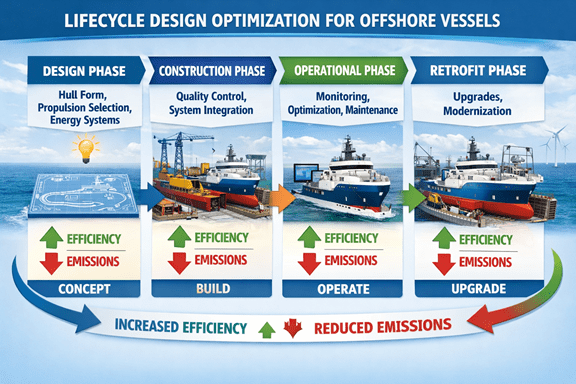
Vessel lifecycle optimization encompasses four distinct phases, each presenting unique optimization opportunities. The design phase establishes the foundation for all subsequent performance characteristics, including hull hydrodynamics, propulsion system selection, energy recovery architecture, and alternative fuel readiness. Strategic decisions made during design can reduce lifecycle emissions by 8-15% and establish the technical foundation for future upgrades. The construction phase ensures that design intent is faithfully executed through rigorous quality control, system integration testing, and performance validation. Optimization during this phase prevents costly rework and ensures systems achieve design performance specifications.
The operational phase, spanning 20-25 years, represents the longest and most critical lifecycle segment. During this phase, maintenance strategies, operational optimization, and strategic upgrade investments directly determine vessel availability, fuel consumption, and emissions performance. The retrofit phase, typically occurring at mid-life or in response to regulatory changes, provides opportunities for significant performance improvements through system modernization, efficiency upgrades, and technology integration.
3.1. Design-Phase Strategies for Emission Reduction and Structural Resilience
Hull-form and hydrodynamic optimization using Computational Fluid Dynamics (CFD) reduces resistance by 8–15 %. SENA Ship Design’s in-house advanced engineering team performs full-scale Reynolds-Averaged Navier-Stokes (RANS) simulations to refine bulbous bows, stern shapes, and appendage arrangements for specific offshore duty cycles.
Propulsion system selection is critical. Dual-fuel engines (LNG, methanol, or ammonia-ready) combined with hybrid battery-electric configurations lower operational emissions by 20–40 %. Wind-assisted propulsion systems (WAPS) — rotor sails or wing sails — further reduce fuel consumption by 5–12 % depending on route and wind statistics.
Structural integrity via Finite Element Analysis (FEA) ensures fatigue life exceeds 25 years in North Sea or Mediterranean conditions. Lightweight high-tensile steel or composite reinforcements, optimized through topology optimization algorithms, reduce lightship weight by 5–8 % without compromising class society requirements (DNV, ABS, BV).
3.2. Construction Supervision and Project Management
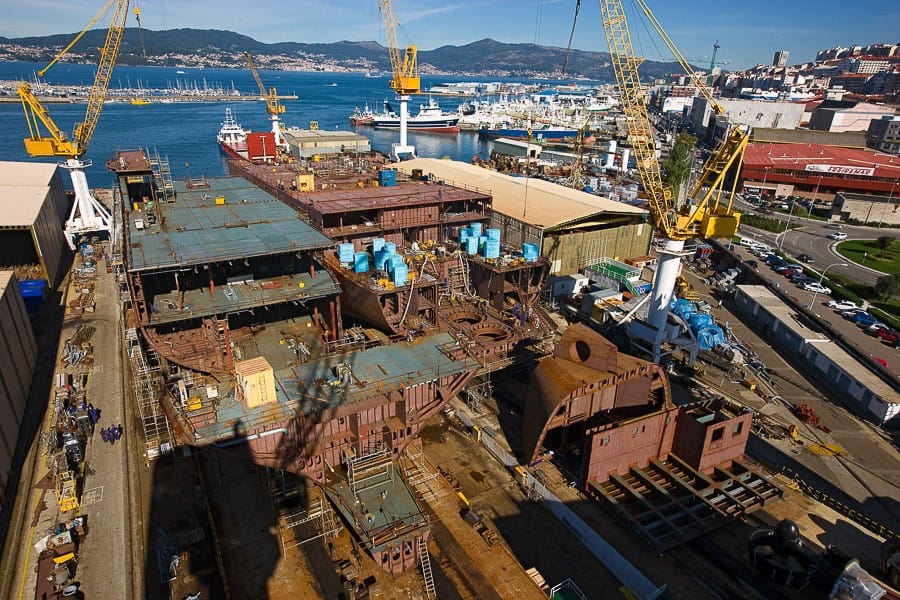
SENA Ship Design offers independent construction supervision and full project management to ensure that all design optimizations are maintained during building. Our experienced teams verify hydrodynamic performance, structural integrity, and system integration on-site, protecting both long-term uptime and emission targets.
3.3. Operational Phase Emissions Optimization
Beyond design-phase improvements, operational optimization delivers substantial emissions reductions. Route optimization utilizing weather routing and sea state analysis reduces fuel consumption by 2-4%. Speed optimization, adjusting vessel speed to match operational requirements rather than maintaining maximum speed, reduces fuel consumption by 5-8%. Load optimization, ensuring cargo and ballast are distributed to minimize hydrodynamic resistance, contributes 1-2% fuel savings. Trim and stability optimization, maintaining optimal vessel trim for prevailing sea conditions, contributes an additional 1-2%. Collectively, operational optimization measures achieve 10-15% fuel consumption reduction, complementing design-phase improvements.
3.4. Refit & Conversion: Extending Vessel Life with Lower Emissions
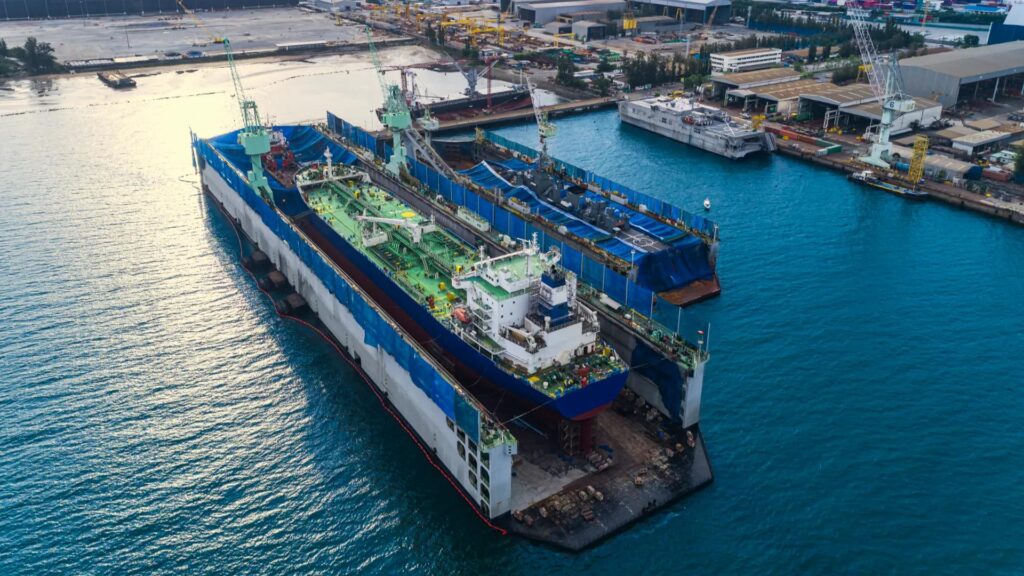
For existing fleets, refit and conversion represent the largest opportunity for improvement. SENA SHIP DESIGN provides complete refit services including:
- Feasibility studies and class-approved modification packages.
- Detailed engineering and production drawings.
- On-site construction supervision.
Typical SENA-led conversion projects achieve EEXI Phase 3 compliance and improve CII ratings from D to B, extending economic life by 10–15 years while reducing annual CO₂ emissions by 25–40%.
4. Return on Investment Analysis
4.1. Investment Requirements
Implementing comprehensive lifecycle optimization requires initial capital investment in condition monitoring systems, digital infrastructure, advanced analytics platforms, and personnel training. For a typical 85-meter offshore support vessel, initial investment ranges from $1.2-1.8 million, encompassing sensor installation, data transmission infrastructure, cloud analytics platforms, and integration with existing vessel management systems. This investment represents approximately 1-2% of vessel acquisition cost, a modest premium that generates substantial returns over the vessel’s operational life.
4.2.Total Cost of Ownership (TCO) Analysis
Total Cost of Ownership represents the comprehensive financial assessment of vessel operation over its entire lifespan. TCO encompasses capital expenditure, fuel costs, maintenance and repair expenses, crew costs, regulatory compliance investments, carbon taxes and emissions credits, and decommissioning costs. For a typical offshore support vessel with a 25-year operational life, fuel costs represent approximately 35% of total ownership cost, maintenance and repair costs account for 18%, capital expenditure comprises 25%, and crew costs contribute 12%. The remaining 10% encompasses regulatory compliance, insurance, and miscellaneous operational expenses.
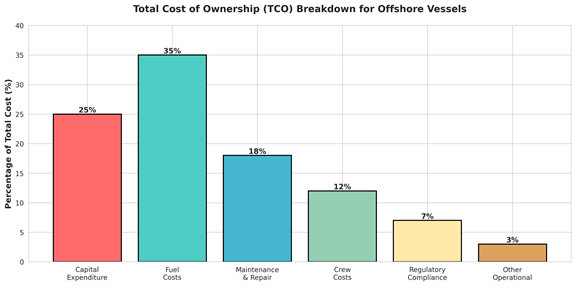
This breakdown demonstrates why lifecycle optimization focusing on fuel efficiency and maintenance cost reduction delivers such substantial financial benefits.
4.3. ROI Projections
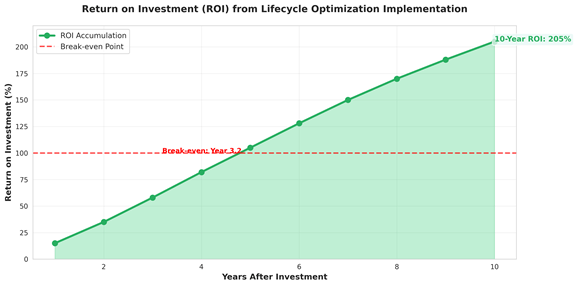
Detailed financial analysis demonstrates that lifecycle optimization investments achieve break-even within 3.2 years, with 10-year ROI exceeding 205%. This exceptional return reflects the cumulative benefits of reduced maintenance costs, improved fuel efficiency, increased vessel availability, and avoided emergency repairs. After break-even, all subsequent cost savings flow directly to the bottom line, generating sustained competitive advantage. For vessel operators managing fleets of multiple vessels, lifecycle optimization across the fleet generates annual savings exceeding $8-12 million, substantially improving fleet economics and shareholder returns.
5. SENA SHIP DESIGN: Lifecycle Optimization Service Provider
SENA Ship Design brings together a multidisciplinary team of naval architects, marine engineers, and digital systems specialists with extensive expertise in lifecycle optimization. Our integrated service approach addresses all dimensions of vessel lifecycle optimization, from initial design through operational optimization and strategic retrofit planning.
- Lifecycle Design Optimization: Comprehensive design studies incorporating hull form optimization, propulsion system selection, energy recovery architecture, and alternative fuel readiness to minimize lifecycle costs and emissions
- Total Cost of Ownership Analysis: Detailed TCO modeling incorporating capital expenditure, fuel costs, maintenance expenses, crew costs, and regulatory compliance investments to support strategic decision-making
- Maintenance Strategy Development: Customized maintenance planning incorporating condition monitoring, predictive analytics, and dynamic scheduling to optimize vessel availability and minimize maintenance costs
- Condition Monitoring System Design: Specification and integration of sensor networks, data transmission infrastructure, and analytics platforms to enable predictive maintenance and real-time performance monitoring
- Digital Twin Development: Creation of comprehensive digital vessel models enabling performance simulation, upgrade impact assessment, and operational optimization
- Retrofit and Modernization Planning: Strategic planning for mid-life upgrades, technology integration, and efficiency improvements to extend vessel service life and enhance performance
- Operational Optimization Consulting: Expert advisory services for route optimization, speed optimization, load optimization, and operational practices to reduce fuel consumption and emissions
- Regulatory Compliance Consulting: Strategic guidance on IMO 2030/2050 compliance, Energy Efficiency Existing Ship Index (EESI), Carbon Intensity Indicator (CII), and regional environmental regulations
Whether you are designing a new vessel or retrofitting an existing fleet, our lifecycle approach pays back many times over in operational savings and regulatory compliance.
Let’s Optimize Your Vessel’s Lifecycle
Contact SENA SHIP DESIGN for a lifecycle optimization consultation on your next offshore vessel project.
© 2026 SENA SHIP DESIGN. All rights reserved. All images are for illustrative purposes; actual deliverables include fully owned IP of the final design.